The small battery charge cycling recently introduced - aging the battery?

I have a 12th Gen FW13.

Fairly recently a BIOS update introduced a new behaviour with regard to battery charging, which is that the battery level will drop by a few percent, then recharge, rather than being held at one level only.

I’ve recently needed to become informed about battery technology, so I’ve been reading a lot on the subject.

So I’m new to this, and I could be completely wrong; but this post is something which I am now wondering about.

A battery can be charging, or discharging, but it cannot do both at the same time.

When the battery is discharging, it seems to me mains power must be being ignored. It’s simply not used; the battery is providing the power.

When the battery is charging, mains power is running the laptop and also being fed to the battery.

In the battery one of the components is the anode, which is a graphite lattice. When the battery is charged, the anode is stuffed full of lithium, and when the battery discharges, the anode is emptied of lithium.

Now, the anode is surrounded by the solid electrolite interphase, which is basically a layer of lithium ions which always form on the surface of the anode. The lithium in the interphase cannot and does not take part in storing electricity.

When a battery is first made, it is in the factory carefully and in a controlled way given its first charge, and this creates the interphase. There is additional lithium in the battery for this.

Now, batteries age - their maximum capacity and rate of charging declines over time.

There are in Lithium-ion batteries two main causes of this, one of which is that charging and discharging respectively physically enlarge and then shrink the size of the anode - charging stuffs the anode full of lithium, discharging empties it out - and this causes physical strain, which leads to minute cracks in the interphase, which get filled up by the electrolyte (the fluid which permeates the battery) and which then forms new interphase inside the crack - permanently consuming some lithium which formerly was involved in storing electricity.

My concern then is that this small cycling of the battery is doing harm, by constantly slightly enlarging and shrinking the battery.

There are a number of other factors involved in battery health, and I’m still learning the ropes, so it may well be that despite this it is still better to slightly cycle the battery.

I would be very interested to hear from those who know about such things.

(Addendum - this bloody forum software :-/ “two tags are mandatory”. At first I can’t see this message because of the popup which tells me about other posts which are like this post. When I want to pick two tags, there’s nothing for battery and I can’t see a list of tags - best I can do is one by one enter each letter of the alphabet, which gives me max four tags starting with that letter, all of which I’ve seen have a note to the effect “you can only use this in some other forum”. I cannot create a new tag. I have picked the tag for FW13 and then a completely incorrect tag supplied to me by the forum, because it was impossible to even begin to look for a better choice. Hitting “create topic” took five bloody minutes of clicking and fighting. Fucks sake guys.)

It can also do both, 90W from the charger and 5W from battery for example. The charge controller gets told do limit power from the charger to 90% of negotiated current and the rest comes from the battery. You can not charge and discharge a battery at the same time but you can certainly draw power from mains and the battery at the same time.

Probably a little bit but the mini discharge charge cycles are quite small and usually extremely short, the overall mileage isn’t that big.

As someone that did quite a bit of digging on finding the source of those micro cycles on the amd side I would still like them to use less aggressive power profiles on at least the powersave and balanced profile but I do not think they are extremely damaging.

1 Like

Thank you, Adrian.

The info about drawing from battery and mains is interesting and useful.

Yes, regarding micro-cycles.

Can you enlarge on what you have in mind when you write about less aggressive power profiles? I’m not quite sure, I think, what a power profile is, in this context.

At least in case of the 7x40u amd framework boards the bigger instances of battery draw while on external power (assuming 60+W psu) are from framework setting the peak power limit to 90% of charger + like 60W for the battery which is fine for the maximum performance power profile but for balanced and powersave going with just the charger would be fine imo (of course with some minimum, running on just charger on a 30W or 40W charger has a negative impact on performance).

The smaller charge cycles (single digit ma for a few seconds) are from the battery constantly slightly redefining what it’s target voltage is which moves vbus and if that is ever so slightly upward it’ll cause a tiny charge cycle. This can be eliminated by setting vbus above the battery target voltage (assuming you have a charge limit <100%) when charging is finished but I am not sure that is actually worth it (I tried it and it totally works though).

Thank you, Adrian.

That was fascinating!

Where I’m new to this, it had not occurred to me for peak power the laptop could and would draw from both mains and battery. Obviously it can, and it’s a neat capability.

Is there any way for us to influence or configure the power profile? is this in BIOS somewhere? I’ve seen the power profiles there of course but detailed stuff like this I cannot remember seeing.

That isn’t a new thing, power sharing between battery and ac has pretty much always been a thing but how it is managed has changed over time.

At least on the amd side the peak power limits are hardcoded in the ec so you’d need to build a custom modified ec which is not the most convenient thing ever but at least it is possible at all which you can’t say for any other laptop I know of.

This whole thing was kind of a fun nerdsnipe, I didn’t overly care about the micro discharges but then got curious why they happened and james3 made this neat guide on how to mess with the ec around that time so I figured it out and then stopped caring again XD.

The EC controls the power profiles.
You can see them being set with “ectool console”
e.g. On my FW16 7840HS with iGPU, when set to “balanced” power profile.
PMF: SPL 43000mW, sPPT 52000mW, fPPT 65000mW, p3T 227000mW, ao_sppt 0mW

To me the interesting one is the P3T one. I have a FW 180W power adapter. So that profile is letting that peak to 227W, thus to provide 227W, it would need 180W from the power adapter and 57W from the battery, thus discharging the battery a bit.
This is generally what you see, the CPU peaking over 180W for very short periods, using up a small amount of battery.
When that battery gets below a certain threshold, the EC switches to charging battery mode.
80W approx goes to charging the battery, leaving about 100W for the CPU.
One possible problem, is that while charging, it still has p3T 227000mW.
I don’t exactly see how it can supply 227W if its not able to pull the extra from the battery, which it cannot while in charging mode.

I have not tested, but I would think, setting p3T to say 80W would mean the CPU never pulls peak power above what the PSU can supply, and thus the battery would never discharge when the PSU is plugged in. I think that would have been a better profile for “Balanced” mode.

That, combined with a EC bug where the PMF power profile messages sometimes get slilently ignored by the CPU/APU, is I think what contributes to discharge/charge cycle problems.

There is also the complication of the dGPU expansion card and the power it draws, but I don’t have one of those so cannot comment there.

There was a test done by one user with a dGPU, and they managed to get it to draw about 400W peak. Only for a very short time, but it did happen.

I have tested that and it is exactly what it does. Setting it too low seems to have pretty massive impacts on achievable power limits though above around 80W I can’t see much differences myself but I only did surface level benchmarks. cb15 and the canned cyberpunk benchmark were within margin of error of 80W and 160W P3T. At 80W P3T there are barely any battery dips with a 65W psu so the spikes are probably short enough for the capacitors to take the slack.

I personally would just have set P3T to power supply as long as it comes out to >80W for balanced and powersave and full blast for high power.

The power profiles are quite complex.
One has variables:

  1. Power Save profile, Balanced Profile, Performance = 3 levels.
  2. dGPU present/absent: 2 levels
  3. Charging, Discharging, Idle = 3 levels
  4. Power Adapter size: Kind of anything from 15W to 240W. Say 10 levels.
  5. Battery Size: 4 levels:
    That makes 3 * 2 * 3 * 10 * 4 = 720 combinations.

The EC codes that with masses of IF statements, which some might view as messy.
I would probably have worked out an equation to set the index and then had a table with 720 entries in it.

I could be further complicated, if one takes into account the smart battery and its limiting the charge rate and discharge rate depending on current charge level and battery temperature.
I.e if the charge rate is lower than normal, one could let the CPU have more power form the Power adapter.

On the 13 it is somewhat simpler with a iirc like 4 level deep if statement for the hard limits which includes P3T, there it would be somewhat simple to just do different math depending on profile.

Newbie question time, folks who know the answers :slight_smile:

Volts and amps.

I am terribly afraid I have remembered what these are exactly the wrong way around.

I have thought volts is number of electrons, amps is how much energy they have.

Am now thinking, having just been checking on this, I have it the wrong way round.

Comments please!

To put it into a fluid metaphor, volts is the pressure and amps is the flow. More pressure difference causes more flow through the same restriction, so no flow at no pressure difference.

Pressure to me seems like how energetic the electrons are. They have a lot of energy - which is to say, they are moving quickly, the more energy the faster they move. The more quickly the electrons are moving, the more pressure they apply. This is volts.

The more or less resistance in the material, the more electrons are impeded in their movement.

This then leads to current, which in fact is a measure of how much energy is being transported by the moving electrons.

So for a fixed voltage (and a fixed resistance), if we imagine varying the current, we necessarily are imagining varying the number of electrons.

Does this all sound correct?

How would you even vary the current with a fixed voltage and resistance voltage and resistance determine the current?

Yes - I see exactly what you mean!

I’ve always thought of this in terms of number of electrons, and how quickly they are moving.

Thinking this over and adjusting mental models now, or trying to : - )

Thank you, very much.

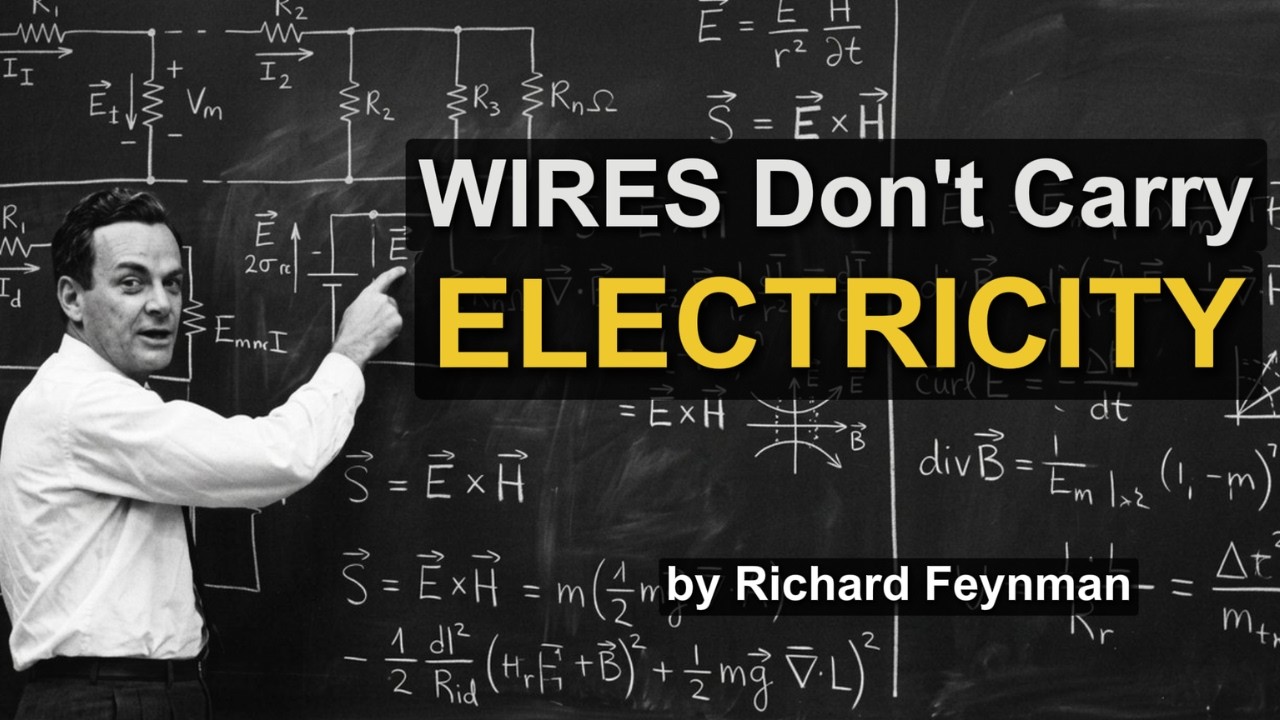
Regarding electrons in wires.
You might find interesting this:
Electrical Power does not flow in wires or any movement of electrons.

James3 -

Wow.

Mind substantially blown : - )

Thank you, very much, for those videos.

It depends on the power path configuration. Here’s an example, different manufacturers may have different paths


In most “traditional” laptops and most gaming laptops, “bypass charging” is used. The “BYPSG” and “BGATE” are a solid wires, Q3 path doesn’t exist and Q4 is a wire(buck converter).
When using AC, VIN is directly connected to VSYS and the battery is being charged by the buck converter(charge controller adjusts the Q1, Q2 duty cycle), NGATE is off, preventing the higher VSYS from flooding the VBAT. When using battery, NGATE is on and VBAT provides power to VSYS.

In many modern netbooks and business laptops without dGPU, including the FL13, “narrow voltage direct charging” is used. “BYPSG” path doesn’t exist and “NGATE” is a wire.
When using AC, VSYS has the same voltage as VBAT, VIN is converted to VBAT via the buck-boost converter. When using battery, When using battery, BGATE is on and VBAT provides power to VSYS.

Some advanced laptops have the exact circuit shown above and support both “bypass charging” and “narrow voltage direct charging” modes.

Remember, the current of an inductor can’t be changed instantly.

For the 1st case, the advantages are higher efficiency and no small battery charge cycling as VSYS load peaks draw power from VIN instantly, and no performance impact with the battery removed. The disadvantage is the power adapter must be powerful enough to handle the peak so you have to carry the OEM adapter with you if you want to plug in.

For the 2nd case, the advantages are the computer supports a wide range of input voltage and power (9V 18W to 20V 100W on FL13) and the OEM charger can power other devices(other PD chargers can power the laptop). The disadvantages is that the peak load drains the battery first even if the load power itself is lower than the adapter power, causing small battery charge cycling.

Some laptops have both a DC jack (with adapter provided) and USB-C PD. You can play video games with reduced performance and battery drain with USB-C input on those gaming laptops. That’s the 3rd case