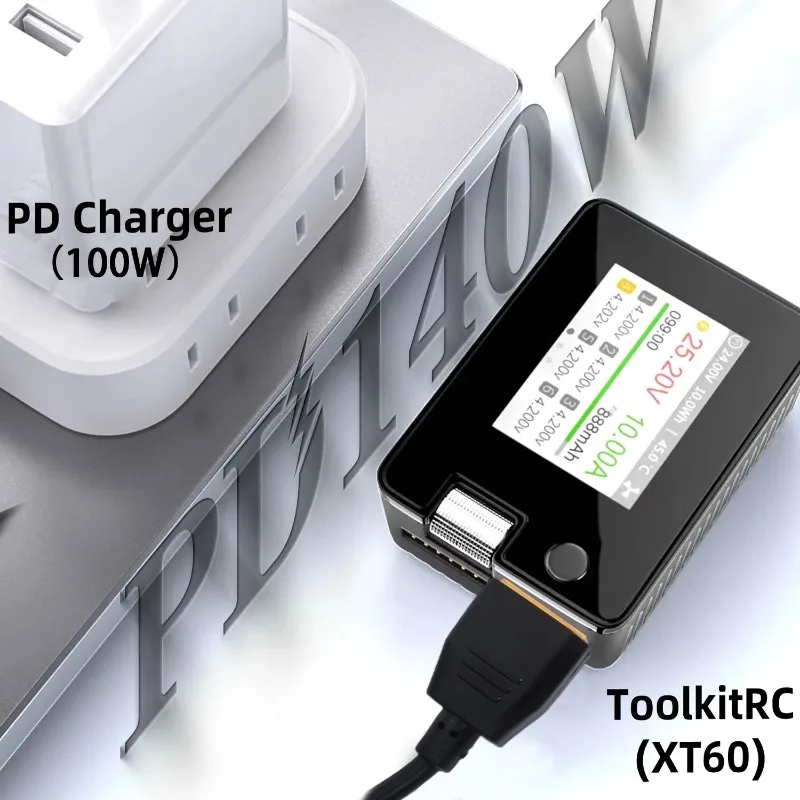
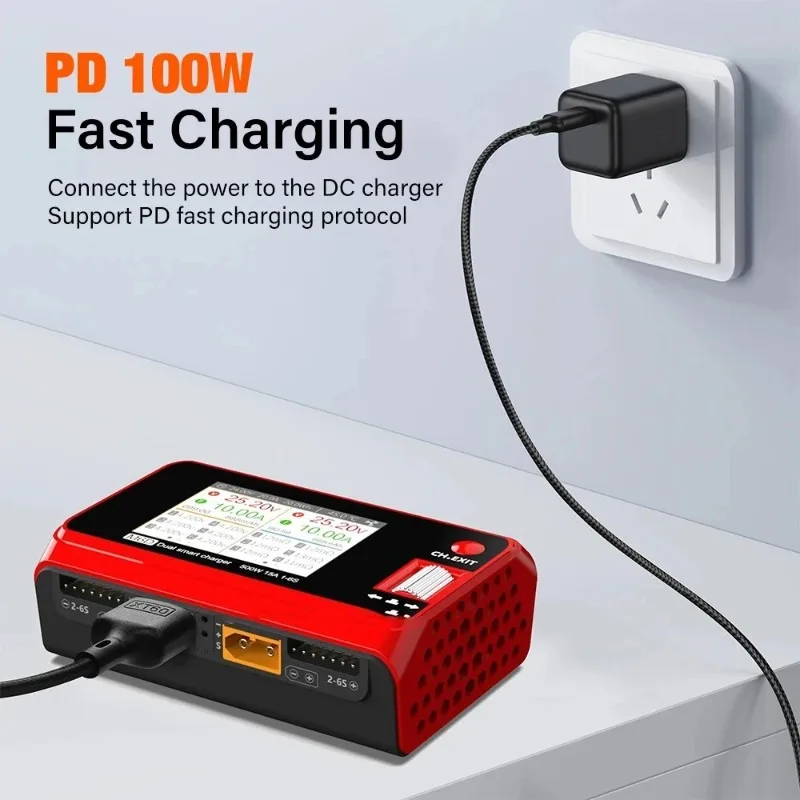
Did you make this cable? Buy it?
If the latter, could you give a link to it?
If you made it, did you connect any other pins? Some usb-c plugs include small PCBs with resistors or other things already going on with some of the pins. Could you give a link to the usb-c plug?
~edit~
Googling a bit, I see that there are lots of USB-C to XT60 cables for sale. But all the ones I’ve skimmed over look to be with USB-C as the input. Here is one that is explicitly labeled on the USB-C plug, amazon.com/dp/B0DHXHTXRP. They really should all have both “input” and “output” labeled. It’s terrible to omit that.
My guess is confirmed. The input triggered the USB-C port of the laptop, it only output 5V, and the 20V from the other side destroyed it.
That makes sense. Since PD charging requires negotiation and has multiple power levels, it’s impossible to convert pure DC into USB-C without a DC-DC converter, only the other way round is possible – triggering DC output from a USB-C port and work as a voltage source
If the pd controller interpreted it as an input it would have switched the power mux to input which connects the vbus from the usb-c cable to the power input rail of the charge controller. There is no special 5v input rail, that’s the same place propperly negotiated 20v would go and the charge controller is also not configured to care about input voltage.
If the cable somehow convinced the pd controller that power output was required it would enable the 5v rail but the power mux should be able to prevent back feeding in output mode. If that somehow did not work it would send 20v to everything on that speciffic 5v rail likely causing damage to anything connected there and maybe even stuff donstream.
Do you have any more speciffics? Cable sounds a bit weird.
Well something like that would certainly not work to charge but simply plugging in the xt60 to <=20V and plugging the usb-c (with it’s probably built in pd decoy) should not blow up the laptop. This does point to the usb-c port being at least asked to switch to output while vbus has >5v present which would put the responsibility on the back-feeding protection of the power-mux. A cable like this does make it more likely to actually cause damage than just plugging in 20v without also trying to convince the laptop to switch to output though.
Man just selling a cable like that to consumers is wild. To be fair I was actually using a diy version of something like this to charge my x260 off a pd power-bank but I kinda knew what i was doing.
It’s not impossible but it is certainly signifficantly harder/niche than the other way around. There are some corpo power-brick to usb-c converters that don’t have dc-dc and just basically advertise “20v, take it or leave it” but they still have power switching that only connects the input to usb-c when the device actually requests that profile.
For this boating application I would probably just use a solid zigarette-ligher pd charger or just a solid pd buck-boost converter (there are a lot of crap ones but those usually blow themselves up not the doenstream device or just can’t handle their rated power and keep cutting out)
This thread has a discussion of 12vdc (or sometimes 24vdc, also) PD supplies. The last post I added a couple weeks ago, listing two reasonable looking options. I have not tried these yet - busy times here. But they represent as fully PD compliant power supplies.
This is super not what you needed. Remember just cause you can plug something into something else doesn’t mean you should. This is honestly a pretty bad idea of a product but it is meant to supply power from a usb-c power supply to devices accepting 20v from an xt-60 but I can’t think of many such devices that can gracefully deal with the power limits of the usb-c source.
What you need is something that provides pd power from a dc source (and ones with a boost converter at that, the bulk of what you’ll find on aliexpress is buck converters). There are modules for that, and if your power source is 12v lead acid batteries it may be easiest to just use car chargers. I would link you the one known good module I have but they apparently don’t sell that anymore.
Do you have some more information on how you hooked it up? What was on the xt60 side?
XT side was a buck/boost converter converting 12v to 20v, max 5 amps.
Why wouldn’t that work the same way the AC powered Framework power supply works which puts out 20v, 3 amps?
That itself was probably not the main issue assuming it actually did put out 20v and not more. But actually making that work would be hard, easier to get a pd board with built in buck-boost converter (because the pd supply needs to supply different voltages and do power limits it is much easier to do that if it has it’s own dc-dc converter).
It is kind of ironic that good bidirectional buck-boost pd boards that can do 100+w continuously are super easy to find but unidirectional ones are kind of rare.
Because on the usb-c side of the cable is set up to ask for power from the device (the framework in this case) no provide power. While the negotiation was never going to work (the fw can’t output anything other than 5v) the lizardbrain part of pd (resistors on cc) got the power mux of the framework to connect the vbus on the cable to 5v. The datasheet of the power mux says it should be able to prevent backfeeding but maybe not (or the polarity was wrong).
Oh, yeah. That is designed for the USB-C plug to be the power input side. As Adrian said, cables like that would be questionable at best, even used as intended. USB PD wasn’t made for that. It violates USB specs in terrible ways.
And your use of it was attempting to use it backwards from it’s intended use. Which lead to destruction.
Since USB PD wasn’t made for that use, the cable has to trick / lie to the USB device. This breaks the normal intelligent negotiation that USB-PD does & makes the whole setup entirely depend on the user to be sure everything is within each device’s limits, current level and voltage is correct, and that it’s generally setup correctly.
I don’t know that much about your setup but you probably need an unidirectional one. I did fin this as an example but I have not tried that particular one myself.
Assuming you are actually using batteries (lead?) you can probably get away with using the much easier to find bidirectional ones (IP2368 is a good chipset and with a heatsink like in that example can deliver 100w functionally indefinitely) and just configuring it to look for something in the right voltage ballpark for whatever batteries or power system you have.
In these pictures the cable is connected to both output side of the power supply and the charger, making it dangerous for either-direction use. Stop using and return it
A 12V lead-acid’s “boost charging” voltage is 14.6V~14.8V but will quickly drop to below 13.2V after disconnected from the charger. A 4-cell LFP li-ion (aka LiFePO4) battery has 12.8V nominal voltage and 14.4V charging voltage. A 4-cell NMC (nickel-magnesium-cobalt) li-ion has 14.8V nominal voltage and 16.8V max charging voltage. Make sure other devices on your boat can handle that voltage.
At near the end of charging, LFP battery’s voltage will increase sharply from 3.4V to 3.6V, make sure you have a good balancing circuit.
There’s no 14.8V LiFePO4 battery. An incorrect rating cannot be trusted just like the “bidirectional” cable with both sides as input shown in the pictures on the product description
Batteries was not the topic but, yes, 14.8 was a typo. The working voltage is 13.6 down to 12.0 or so. Marine equipment loves the higher supplied voltage down to a much lower charge from LiFeP04 and some of it won’t work well below 11.75 at the battery. My carbon foam lead AGMs drop to 12v at about 40% charge and the Li are 12v at 10%. That, plus the faster rate of charge acceptance for the last 20% make Li an easy choice.
In that case using bidirectional ones at least should not be a problem (as long as you aren’t trying to charge other powerbanks, they tend to have some issues with figuring out who charges who).
That wasn’t even the case before usb-c but charger-id tended to be a lot simpler back then with everyone apart from dell and apple using resistor dividers on the 3rd pin to indicated the wattage of the charger.
I used a diy version of what your cable does to charge my x260 off a usb-pd power bank back in the day but I don’t think this is a product they should just sell to consumers, it has a very narrow application but that is very hard to communicate that to consumers.
Hard wiring does help with the abomination that the lighter plug is. Sounds like a decent plan, just maybe test it with some sacrificial device (old phone maybe) first before plugging it into a laptop XD.