This will have the opposite effect of what you are trying. As a lithium polymer battery with modern chemistry cycles and ages, if you attempt to continue to charge it to the original voltage from when it was new, aging will accelerate, rapidly. The battery and cell vendors characterize a max charge voltage curve over aging that maximizes cycle longevity, specifically optimizing for max charge level at 1,000 cycles. Ideally max voltage would be a smooth curve instead of being drops at certain cycle counts, but that isn’t something our battery vendor was familiar with characterizing and programming.
4 Likes
This is not the case with all my previous batteries of my previous devices. What make this battery different?
We already have charge limit and battery extender on the BIOS setting. The reduce voltage limit thing is doing the thing the manufacturer (or the battery vendor) are trying to prevent. On both 55Wh and 61Wh and probably 85Wh, dropping the voltage makes the battery health to decline sharply(or maybe it’s just a readout error). Please, give the choice of full charge back to the users of Framework Laptops.
Anyway, thank you for explaining this and I will quote your reply to relevant topics and explaining that this is not a bug.
Reducing voltage does not reduce battery health.
Quite the opposite, it preserves remaining health, as high voltage is stressful and induces more wear.
3 Likes
However it reduces the runtime of the device. Since runtime is tied to battery health and these two terms are often used interchangeably. If the voltage is reduced so the top level of capacity is no longer accessible by all users (minus the most advanced ones), the battery health is no longer indicative. Also the purpose of preserving battery health is to slow down runtime decline, reducing the top voltage and making the full remaining capacity inaccessible makes preserving battery less meaningful. If the 80% capacity after 1000 cycles is measured using the dropped voltage it’s still accurate.
Aren’t some of the values still hard coded in the ec or is that just max power for the power limiting code and stuff?
Well kinda, it certianly reduces how many wh you can stuff into it and numerical battery health is measured in how many wh it can stick into it currently vs how many it was designed for. Lowering the voltage is likely to make that number drop slower though.
But honestly why not just ship it with the lowest max voltage then it’ll last even longer and for purpose of tsa limits and stuff you can pack in more battery.
1 Like
I have not actually seen what voltage the battery is at 100% charge.
I doubt changing 17.8V to 17.6 makes much difference.
My understanding is that going over that limit damages the battery, so if the battery itself wishes to lower it, it is probably best to comply with it.
It’s only a reduction of about 1.1%
I think in reality, no-one would notice the difference.
I only charge to 80% anyway, to increase battery life, so it makes no difference to me.
2 Likes
You can’t really math it like that, since the capacity per v is not linear and you can’t go to 0. Though in all the batteries I have seen the capacity per V dropped dramatically above 3.8v per cell.
Certainly, it should have probably not been above that to begin with.
Apparently someone did XD
1 Like
This is just my 2 cents, not a “right or wrong” argument, agree to disagree
I think it’s a bit better if the battery manufacturers label the realistic Limited Charging Voltage instead of labeling a higher voltage that is only available on the first 100-ish cycles. Most if not all laptop from more than a decade ago did the actual sustained voltage, the Limited Charging Voltage is the voltage from the beginning to 1000 cycle and beyond.
The meaning or purpose of charging to 80% increase battery life is to make the runtime available longer when max endurance is needed as you can always charge to 100% on demand. If the upper capacity is blocked by BMS for the sake of preserving the battery life doing so would be meaningless.
More than one, one 61Wh user and a 55Wh user, probably more as many users aren’t active in the forum.
Here’s an example of an LCO battery(probably made by ATL) used on portable devices
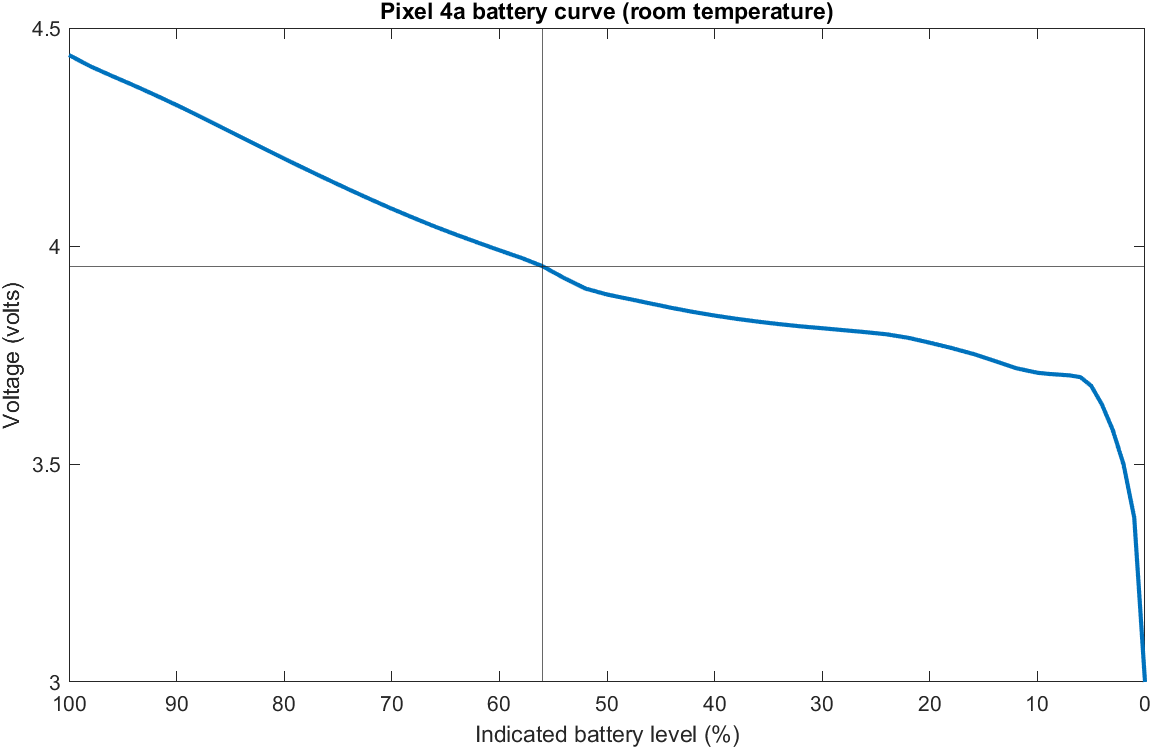
This. I have a 8 y/o phone that use ATL battery, the same battery brand used in FL, it doesn’t lower the voltage even after 1200~1600-ish cycles and it’s durable as heck. The cycle is probably 1800~2000 and the battery health is still at 72% to 75%.
For many older batteries, the aging won’t accelerate even after 1000 cycles, in fact, quite the opposite, the aging slowed down after 800-ish cycles. If newer batteries have to reduce voltage to reduce the aging acceleration, the voltage is too high to begin with.
In conclusion, older batteries’ initial charging voltage is sustained voltage is the Limited Charging Voltage labeled. Recently, battery manufacturers boost the battery voltage to give better initial runtime to gain a competitive edge. However, this is not sustainable so they have to dial back after a certain cycle, to the “original” voltage. Since the newer capacity is calibrated using the “instantaneous” voltage and this voltage is labeled as Limited Charging Voltage. For a given chemistry, using a newer BMS will yield a higher labeled capacity/energy density.
1 Like
Yeah I don’t really like this, feels a lot like juicing the hell out of the first couple cycles to cheese reviews which does leave kind of a bad aftertaste.
I wouldn’t imply any malice here. For car batteries I read somewhere that you’re supposed to slightly overcharge them for the first few cycles as that will generally improve their health and longetivity over a long time. Battery chemistry is difficult and a similar effect could be at play here.
1 Like
I would not call it malice, just the result of some screwy incentive structures.
That sounds like the kind of things that applied to NiCa/NIMh chemistries, are you sure that applied to lithium? We are also taling about the first few hundred cycles not the first few here.
Car batteries are Lead-Acid and keeping at full charge is best for their longevity
Ni-Cad and NiMH can be overcharged at a low C-rate without damage.
For Li-ion, overcharging even slightly, is very bad for the battery, even trickle charging is not allowed. When the current falls below a certain degree (typically 0.03C) during CV phase, the current is switched off and charging is finished
This would be on a very old lithium ion chemistry, and wouldn’t reflect the behavior of the recent higher energy density chemistries used across consumer electronics.
2 Likes
It’s a bit sad to see that the battery industry (and probably many other industries as well) has shifted from “build to last” to “performance at launch”
5 Likes
Agreed…
4 Likes
I was referring to lithium batteries in electric cars.
1 Like
So… I think the conversation got a bit off topic with battery chemistry… If I understood correctly. The 0NMPKX works as a battery extension to use on the framework? So I could use it to connect the framework 16 mainboard to the 85whr battery if I have my own custom case on it? no modifications needed, no changes to the BMS, bios or anything?
If you are just doing a pure extension of the cable, the BMS and EC probably won’t even know an extension is present. So likely no problem.
Welcome to the forum, by the way.
1 Like